
Fathom mining
Fathom is what you find when you mine deep. Natural ore in the mining worlds can turn up gems you sell for money and Sealed Relics you can chisel open anywhere. Mine long enough below ground and the rock starts to push back, until you can call up a boss of your own.
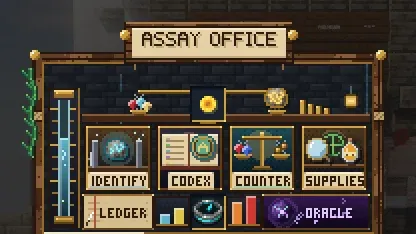
Open it with /fathom (also /mine). Mining stays close to vanilla by default: no boss bar, no cave-ins, nothing attacking you unless you ask for it.
Fathom works in the claiming world, its Nether, the resource worlds and the Frontier. Only natural ore counts, never ore that someone placed.
Any natural ore can drop a gem. Rarer ores drop rarer gems more often. Sell them to the Assayer for money.
| Gem | Found in | Sells for |
|---|---|---|
| Jet | Coal ore | $120 |
| Garnet | Copper and iron ore | $200 |
| Ember Quartz | Nether quartz, Nether gold, ancient debris | $250 |
| Ruby | Redstone ore | $300 |
| Sapphire | Lapis ore | $300 |
| Topaz | Gold ore | $350 |
| Seaglass Opal | Diamond and emerald ore | $1,500 |
Pressure
Section titled “Pressure”Below y 40, every ore you mine builds pressure, and deeper ore builds it faster. Surfacing under open sky bleeds it off, and so does resting. Check yours in /fathom.
| Pressure | Stage | What happens |
|---|---|---|
| 0 to 24 | Calm | Normal finds |
| 25 to 49 | Creaking | Richer finds |
| 50 to 74 | Groaning | Relic odds double |
| 75 to 100 | Breaking | Relics x3, and you pocket a Rumbling Vein |
A Rumbling Vein is your ticket to a boss fight. Right-click it underground (below y 40, or in the Nether) whenever you are ready and a Vein Warden rises.
Deep Delve
Section titled “Deep Delve”Want the rock to fight back? /fathom delve turns on Deep Delve for you: cave-ins, Drowned Delvers that crawl out of the walls at Groaning, and Wardens that wake on their own at Breaking. In return, relic odds go up by another 25%. Turn it off the same way.

Sealed Relics and the Assay Office
Section titled “Sealed Relics and the Assay Office”Relics come sealed in five tiers: Common, Uncommon, Rare, Epic and Legendary. Epic and better finds are announced to the server. Identifying a relic reveals which one it is and adds it to your Relic Codex. You have two ways to do it.
Chisel it yourself. Hold a Sealed Relic and right-click, anywhere. It takes a few seconds, and a bar shows your progress. Sneak and right-click to chisel the whole stack one after another. Switch to another hotbar slot to stop. Right-clicking a chest still opens it, so sneak if you want to chisel against one.
Leave it with Maud. Open the identify bench at the Assay Office on Bucket Quay, or from /fathom. Her timers keep running while you are offline, so it suits a big pile you want to come back to. You start with three bench slots, and gain a fourth and fifth as your Delving Seamark reaches 20 and 40.
Either way you get the same relic, the same Codex entry and the same Delving XP.
Once a relic is identified, you can keep it or assay it at Maud’s counter for Deep Scrip, Fathom’s own currency.
| Tier | Chisel time | Bench time | Assays for |
|---|---|---|---|
| Common | 1.5 seconds | 2 minutes | 1 scrip |
| Uncommon | 2.5 seconds | 5 minutes | 2 scrip |
| Rare | 4 seconds | 10 minutes | 5 scrip |
| Epic | 6 seconds | 20 minutes | 12 scrip |
| Legendary | 8 seconds | 30 minutes | 30 scrip |
The Relic Codex holds 25 relics, five per tier. New Codex entries pay bonus scrip, and recording all 25 earns the [Relic Keeper] title and the Fathom elytra cape. Relics you have not identified yet show as black silhouettes, in the Codex and everywhere else, so you can see the shape but not the details until it is yours.
Relics in chat
Section titled “Relics in chat”Relic names in Fathom chat messages (big finds, Maud’s identify messages) are links. Hover a name to see the item, or click it for a quick look at the relic and whether it is in your Codex (look only, you cannot take anything). When someone completes the Relic Codex, click the message to browse their finished Codex.
Spending Deep Scrip
Section titled “Spending Deep Scrip”| Item | Scrip | What it does |
|---|---|---|
| Pressure Valve | 2 | Right-click to vent 25 pressure |
| Assayer’s Loupe | 3 | Finishes one bench identify instantly |
| Deep Draught | 4 | Pressure builds 50% faster for 10 minutes |
| Rumbling Vein | 6 | Summon a Vein Warden on demand |
| [Delver] title | 40 | |
| [Deep Assayer] title | 120 | |
| [Fathomer] title | 300 |
The bosses
Section titled “The bosses”Vein Warden. Summoned with a Rumbling Vein (or waking on its own in Deep Delve). Everyone who deals at least 5% of its damage, or is within 24 blocks when it dies, gets their own cache: 15 to 30 Deep Scrip, at least one Rare-or-better relic, and a chance at an Oracle Stone. Summoned fights pay 5 extra scrip each. It retreats if you take too long.


Deep Oracle. Charge an Oracle Stone by mining 35 diamond ore, emerald ore or ancient debris while carrying it, then wake the Oracle at the altar at the bottom of the Old Deepworks. Its caches hold 40 to 70 scrip, two Epic-or-better relics and a small chance at a Trench book.
Breaking a Vein Warden is one of the five Captain’s Orders, and Fathom has its own quests in the Boss Challenges section of /quests.